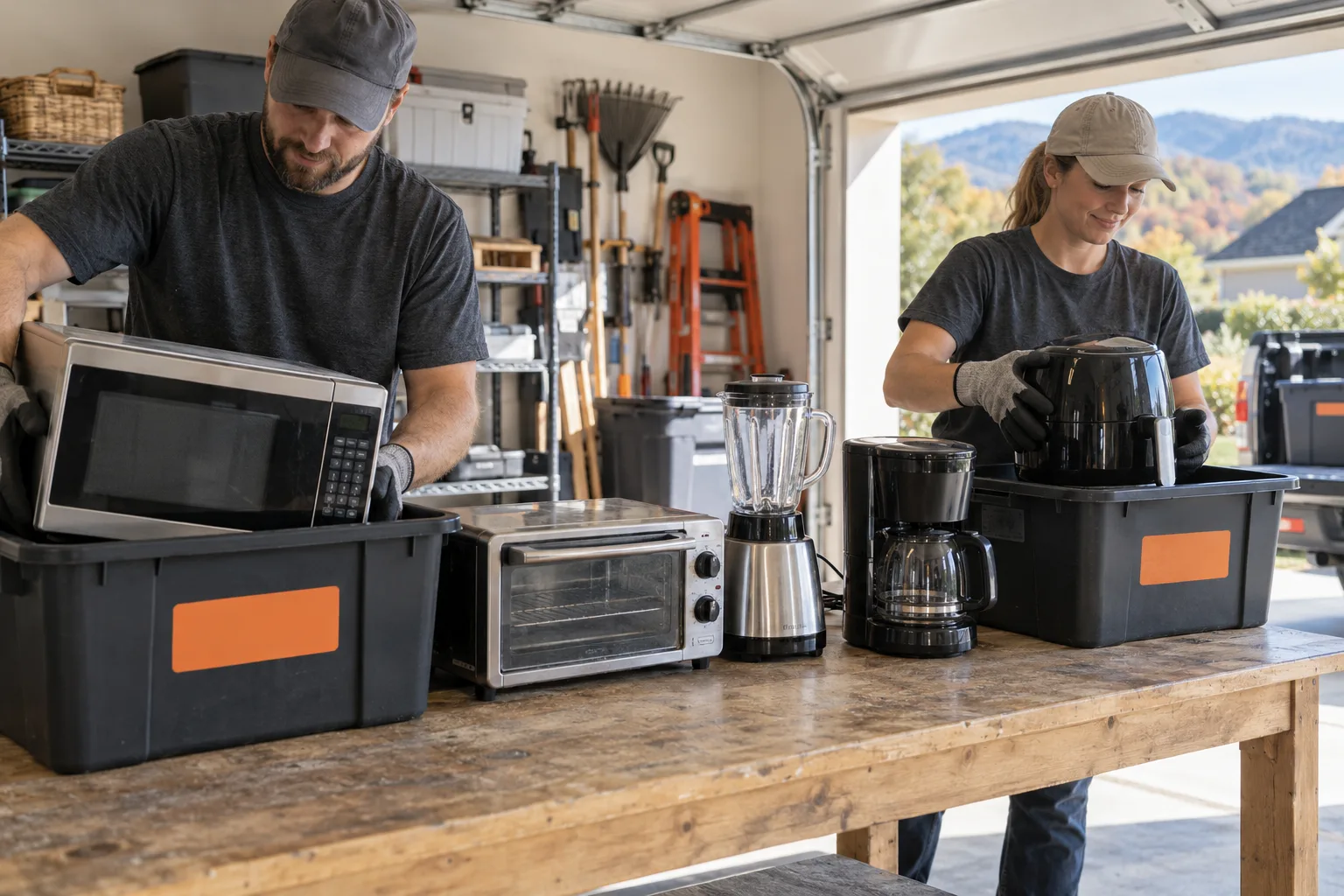
Gather microwaves, toaster ovens, coffee makers, mixers, blenders, air fryers, and similar items in one visible area. Count each item and note anything unusually heavy, sharp, broken, or greasy.
Make one complete inventory
An accurate list makes the estimate more useful and prevents a forgotten appliance from becoming a last-minute addition.
Remove loose and personal items
Empty crumbs, liquids, coffee grounds, removable trays, and food. Take out personal accessories you plan to keep. Bundle power cords without cutting them and place glass carafes or loose blades in a separate sturdy box.
Do not dismantle sealed electrical parts. Batteries, pressurized cylinders, chemicals, and devices with damaged lithium packs may need a separate approved disposal path.
Separate reusable from broken
Working appliances may meet a local organization’s acceptance rules, but acceptance changes and should be confirmed directly before drop-off. Asheville Habitat for Humanity’s ReStore, for example, publishes condition and age requirements for donated appliances.
Label working and nonworking items for your own inventory. Do not promise yourself that every working item will be donated; the receiving organization decides what it can accept.
Pickup-readiness checklist
- Complete item count
- Food and liquids removed
- Loose glass and blades boxed
- Cords bundled
- Battery or hazardous items separated
Next step
Use the checklist to gather the job details, then review the companion small appliance removal service page. Call only after utility and installation questions are settled.
Sources and scope
Local appliance examples and disposal context were checked against the City of Asheville’s appliance guidance, the client’s published service list, and current local service results on October 1, 2026. Donation acceptance should always be confirmed directly with the receiving organization.